;
Apr 282026
 
Please share!
Share
Directing memory, style, and dystopian: the Giver production picture of Jonas behind a vintage tv with a round antenna and the Giver looking at him

There’s something poetic about directing a story like The Giver with themes of memory inside a building that holds so much of its own.

At Gaslight-Baker Theatre (a historic 1920 venue in the heart of Lockhart, TX) every production feels like a conversation between past and present for me. The theatre itself began as a movie house in 1920 before evolving into the live community theatre stage it is today. That layered history makes it the perfect home for The Giver, (Lois Lowry, April 29, 1993) a story obsessed with what we choose to remember and what we choose to erase.

And for me, directing this show became something deeply personal: a collision of my love of theatre, fashion, and dystopian storytelling, marrying my current WIP (works in progress) novels.

coummunity theatre Theatrical production of the Giver with Fiona on a stylized vintage vibe bike, Jonas looking at a folder and Giver looking over his shoulder.

Dystopia Through a Vintage Lens

Most productions of The Giver lean into sterile minimalism—clean lines, blank spaces, emotionless costuming, jumpsuits, or soft granola-like clothing. I didn’t want that. Instead, I asked: What if this “perfect” society borrowed its aesthetic from a past that already valued conformity? That question led me straight to the 1950s.

There’s something haunting about mid-century Americana, the crisp silhouettes, the polite smiles, the rigid expectations. It’s beautiful…but controlled. Ordered. Restrained. In other words: eerily compatible with the world of The Giver.

So I infused the production with what I call “1950s Fallout vibes.”

  • Shades of gray instead of solid gray
  • Structured dresses and tidy uniforms
  • A world that looks nostalgic, but feels quietly oppressive
  • Geometric design that at first feels structured, but then you notice how everything is slanted and slightly off-kilter.

The goal was to create a visual language where the audience recognizes comfort… and then slowly realizes the cost of it.

Scene from Directing Memory, Style, and Dystopian: The Giver at Gaslight Baker Theatre Mom in black piped asymmetric shirt and skirt, Jonas in slanted pants and almost star trek like shirt, Dad in block and outlined jacket, Fiona in school uniform with asymetric hem and slanted button line. Lily in original v-hem pinafore style dress.

Fashion as Storytelling

Fashion has always been part of how I understand character and I cannot write a book or direct a play with paying special attention to fashion, infusing vintage wherever I can.

Not just what people wear—but why they wear it, and what that says about power, identity, and control.

In this production of The Giver play, costume became a storytelling device. My costumer Jill Kammerdiener looked at my inspo boards and understood the assignment:

  • Sameness was tailored, not blank
  • Costumes hinted at careers and character
  • Small variations became acts of rebellion
  • Some skirts, necklines and button rows were asymmetric
  • Pant hems slanted
  • Piping added harsh lines and definition
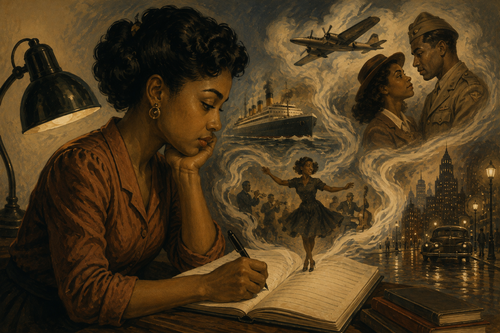
teens 20s gal at typewriter

Why Dystopia + History Is My Creative Home

I’ve always lived at the intersection of two genres:

  • Dystopian literature, where systems control identity
  • Historical fiction, where society defines it

At first glance, they seem opposite—but they’re not. Both ask the same question: Who gets to decide who you are? That question doesn’t just live in The Giver, it’s the heartbeat of the stories I’m writing now. Projects that blend vintage aesthetics with speculative worlds.

In The Luminous Glow series and Engendered (working titles), you’ll see that love of retro style and storytelling collide. And through Gaslight Baker Theatre, I got to bring those ideas to life in a completely different medium: live, immediate, and shared with a community visually through fashion, set design, sound design (Dave Francis the Drum Doctor) and projections (Tim Peterson).

DIY Vintage Mic Tam and Jon Vaudeville man in suit woman in vintage dress and feather hat

Directing as Translation

Directing The Giver wasn’t just about staging a play. It was about translating:

  • A novel into movement
  • A concept into imagery
  • A warning into something you can feel

And for me, the key was aesthetic. Because audiences don’t just hear a story. They see it. Wear it. Recognize it. When someone in the audience looks at a costume and thinks, “That’s beautiful… but something’s off,” that’s when the story is working.

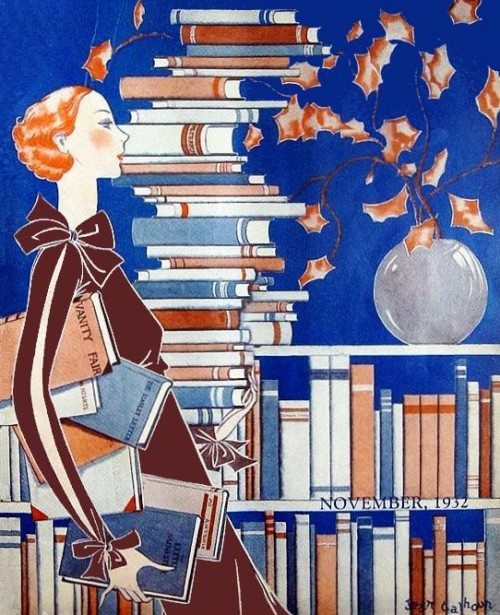
Charms for book lover gifts

Memory, Identity, and the Stories We Choose

In the end, The Giver asks us to confront a terrifying idea:

What if a perfect world requires you to give up the very things that make you human? And maybe that’s why I couldn’t resist layering it with vintage beauty, because history has already shown us how easily elegance and control can coexist and how many people in American right now are trying to control the population with the idea of past perfection.

This production became my way of holding both truths at once:

  • The past is beautiful
  • The past is dangerous
  • And sometimes… the future borrows from both

::

Have you read The Giver or the companion book: Gathering Blue, Messenger, Son? Seen the movie (which is VERY far away from the book and stage play). What are some of your fave dystopian reads? Do you have thoughts about my vintage-fying The Giver? What do you think of vintage vibes in dystopian?

Tam Francis, author photo 1940s style hand on chin black dress

Tam Francis is a writer, blogger, swing dance teacher, avid vintage collector, and seamstress. She shares her love of this genre through her novels, blog, and short stories. She enjoys hearing from you, sharing ideas, forging friendships, and exchanging guest blogs. For all the Girl in the Jitterbug Dress news, give-aways, events, and excitement, make sure to join her list and like her FB page! Join my list ~ Facebook page
Please share & comment!

Please share!
Share
Oct 312025
 
Please share!
Share

I’m thrilled to share that I’ve won 2nd place in the Historical Romance category at the The BookFest Fall 2025 Awards for my novel The Girl in the Jitterbug Dress Dances in the Dark. This is a wonderful achievement and a moment to celebrate not just winning awards, but what it signifies for indie authors everywhere.

And as any published author will tell you, this is not a solo journey. I could not have achieved this goal without my amazing critique group and beta readers. When I moved to Texas, I started a weekly critique group that has been meeting since 2013. In addition to the weekly editing suggestions (alpha readers), I have several beta readers who read the entire manuscript from start to finish and offer critiques.

Award winning novel graphic of a vintage type-writer with a seal and riboon surrounded by a color teal, red, and yellow leaf wreath

Why Award Winning Matters

  • Recognition of craft. The BookFest Awards describe themselves as honoring authors who “create outstanding works of fiction and nonfiction” and use a three-step judging process including genre-experts and design/art judges. The 2nd place award winning signals that my story, voice and production met a high bar.
  • Validation for indie authors. No matter how much you love your story, an external award gives a confidence boost: it says someone else sees the value you poured into this.
  • Marketing momentum. Award winning offers concrete phrases you can use in bookshelves, author bios, social media (“Award-winning novel”, “2nd place BookFest Fall 2025, Historical Romance”), which helps catch reader attention and gives trust to new readers.
  • Networking and opportunities. Participating in the BookFest events or other contest winning events often offers livestream panels, booths, author chats, and a broader community. Being an award winner gives more visibility among that audience.
  • Motivation to keep pushing. Award Winning or placing in a contest makes it real: you’re part of the writing industry conversation and you can build on it, refine, expand, enter more contests. The upward spiral begins. I know whenever I am feeling low and defeatist about my writing, I reread those glowing reviews and revisit a contest win, and it keeps me writing.
Dramatic woman standting atop a staircase holding a book. A scarf flowing behind her, all done in graphic yellow, red, and black

What Indie Authors Should Know About Entering Contests

Key take-aways (inspired by how The BookFest Award Winning contests and the broader contest world) that indie authors can lean into:

  • Read the guidelines carefully. For example: The BookFest requires books submitted to be published between Jan 1 2020 and Sept 16 2025 for the Fall 2025 Awards. Knowing cutoff dates, formats (PDF/ePub, image resolution for cover), and category definitions saves wasted entries.
  • Choose the right category. The BookFest and usually other contests have very specific genre subdivisions (e.g., Romance: Romance Historical – 20th Century; Romance Historical – Ancient World; Romance Historical – Regency; etc.). Matching your book’s era and sub-genre matters for fair judging.
  • Prepare your files professionally. Example: clean cover image (they ask for at least 1080 px tall, PNG/JPEG) and interior file (PDF or ePub) are required. This is part of showing you take your book seriously.
  • Budget for cost and effort. The BookFest lists entry pricing as do most short story and novel contests. So factor cost plus time into your indie author business plan.
  • Use the award win actively. Once you win or place, get the certificate, award graphic, mention it in your marketing. Most contests give downloadable certificates and award graphics.
  • Don’t see contests as just ‘win or nothing’. Even being a finalist or placing is beneficial. Exposure, feedback (usually for a fee), networking matter. And each entry is a step in building your author platform.
  • Select contests strategically. Look for contests that: (a) accept indie/self-published works, (b) have credible judging and good visibility, (c) align with your genre, (d) offer real promotional value (not just a badge).
  • Leverage the award beyond “hey, I got a trophy”. Use the win in your press kit, in your author bio, in social media posts, email newsletters, website banners. It becomes part of your brand.
Windy swirl of colors dark blue, light blue and yellow with a female figure walking holding a book

What This Means for Me & You

The 2nd place win signals that among historical-romance entries this season, the novel stood out. It gives me a platform: readers who might not have discovered it now will see the accolade, and it adds credibility to future books I write.

For other indie authors: if you have a story you believe in, whether historical romance, sci-fi, mystery, etc., it’s worth investing in contest entries as one part of your overall strategy (alongside the writing, critique groups/partners, editing, cover design, and promotion).

However, contests are not a magic bullet, but they can be good tools, especially combined with strong storytelling, good editing, compelling covers, and persistent marketing. Every win or placement is a stepping stone to build on.

A 1940s looking woman in a blue top with puff sleeves, aline tan skirt with a medallian behind her and flowers with the words WRITER scrolled across the bottom of picture, vintage vibes

::

What do you think when you see an award label on a book? Do you have favorite indie author award winning books you’ve read? As an author, do your award wins help keep you motivated?

Tam Francis, author photo 1940s style hand on chin black dress

Tam Francis is a writer, blogger, swing dance teacher, avid vintage collector, and seamstress. She shares her love of this genre through her novels, blog, and short stories. She enjoys hearing from you, sharing ideas, forging friendships, and exchanging guest blogs. For all the Girl in the Jitterbug Dress news, give-aways, events, and excitement, make sure to join her list and like her FB page! Join my list ~ Facebook page
Please share & comment!

Please share!
Share

Ballad of Black Tom: Vintage Book Review

 Posted by on Sep 26, 2025 at 11:03 AM
Sep 262025
 
Ballad of Black Tom: Vintage Book Review

The Synopsis The Ballad of Black Tom by Victor LaValle (Tor.com, February 16, 2016) is the cat’s pajamas when it comes to Lovecraftian horror re-imagined. With grit, soul, and a touch of jazz-age flair, for this Ballad of Black Tom Review, we swing into 1920s Harlem. Charles Thomas Tester is a street-smart hustler who plays […more…]

Top 20 Movies with Vintage Fall Vibes

 Posted by on Sep 17, 2025 at 11:27 AM
Sep 172025
 
Top 20 Movies with Vintage Fall Vibes

by Tam Francis I never used to be a fall person, but since moving to Texas, it’s the time of the year when the heat gives way to cool mornings and evening porch-sitting. Think autumn leaves, tweed coats, wood-paneled libraries, warm lighting, vintage cafes, and a sense of nostalgic comfort. So, to get you in […more…]

Below the Grand Hotel: Vintage Book Review

 Posted by on Sep 12, 2025 at 8:00 PM
Sep 122025
 
Below the Grand Hotel: Vintage Book Review

The Synopsis Below the Grand Hotel by Cat Scully (CLASH Books, May 6, 2025) is the cat’s pajamas and macabre historical fantasy–horror debut. For this Below the Grand Hotel: Vintage book review, we go to opulent 1920s New York, following Mabel Rose Dixon, a scrappy performer from Georgia determined to become a Ziegfeld girl. When […more…]

Sep 012025
 
From Swing to Survival: Why Vintage Vibes Belong in Dystopia

by Tam Francis What do moonlit swing dances and desolate dystopian cities have in common? More than you’d think. If you’ve read my vintage fiction, you know I’m obsessed with the rhythm of swing music, the swish of a gored skirt, the romance of a well-dressed man, and of danger behind a flirtatious glance. But […more…]

Aug 132025
 
Salt to the Sea: Vintage Book Review-Forgotten WWII Tragedy

The Synopsis Salt to the Sea Philomel Books (February 2016) by Ruta Sepetys is a gripping, heart-wrenching WWII historical fiction that sheds light on the forgotten maritime tragedy of the Wilhelm Gustloff. My Salt to the Sea: Vintage book review finds us amidst the brutal winter of 1945, as the Soviet army advances through East […more…]

Jul 312025
 
Dress Your Characters in Vintage Style: Wardrobes of the Written Word

A character’s clothing isn’t just what they wear—it’s who they are. Learn how to dress your characters in vintage style. In historical fiction, fashion can be a doorway into personality, class, culture, and conflict. With just a few well-chosen details, you can conjure a whole life in the tilt of a hat or the tug […more…]