
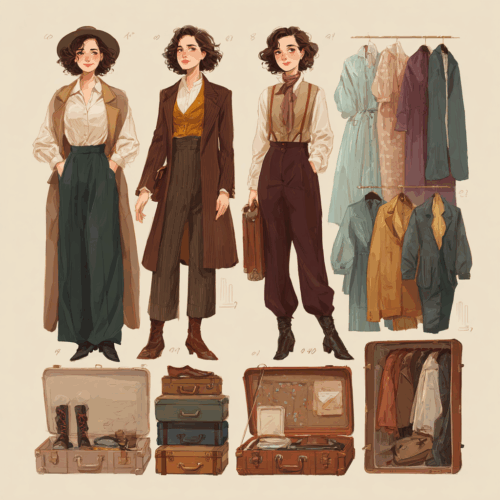
A character’s clothing isn’t just what they wear—it’s who they are.
Learn how to dress your characters in vintage style. In historical fiction, fashion can be a doorway into personality, class, culture, and conflict. With just a few well-chosen details, you can conjure a whole life in the tilt of a hat or the tug of a glove. Since my writing falls into what I like to call “vintage chicklit,” light historical fiction with fashion, passion, danger, and dance, I will focus on the 1920s-1950s.

Dress Your Characters in Vintage Style: Fashion as Characterization
Clothing choices—especially in the past—said something about who a person was and who they wanted to be. A stiff-collared dress might suggest propriety. A cigarette-stained lace blouse may hint at defiance. A woman in a tailored 1940s skirt suit might be trying to look “put together” while her world quietly crumbles.
Ask yourself:
- Does this character care how they look?
- Are they dressing for comfort, rebellion, conformity—or survival?
- What are they hiding or revealing?
Dress Your Characters in Vintage Style: The Psychology of Dress
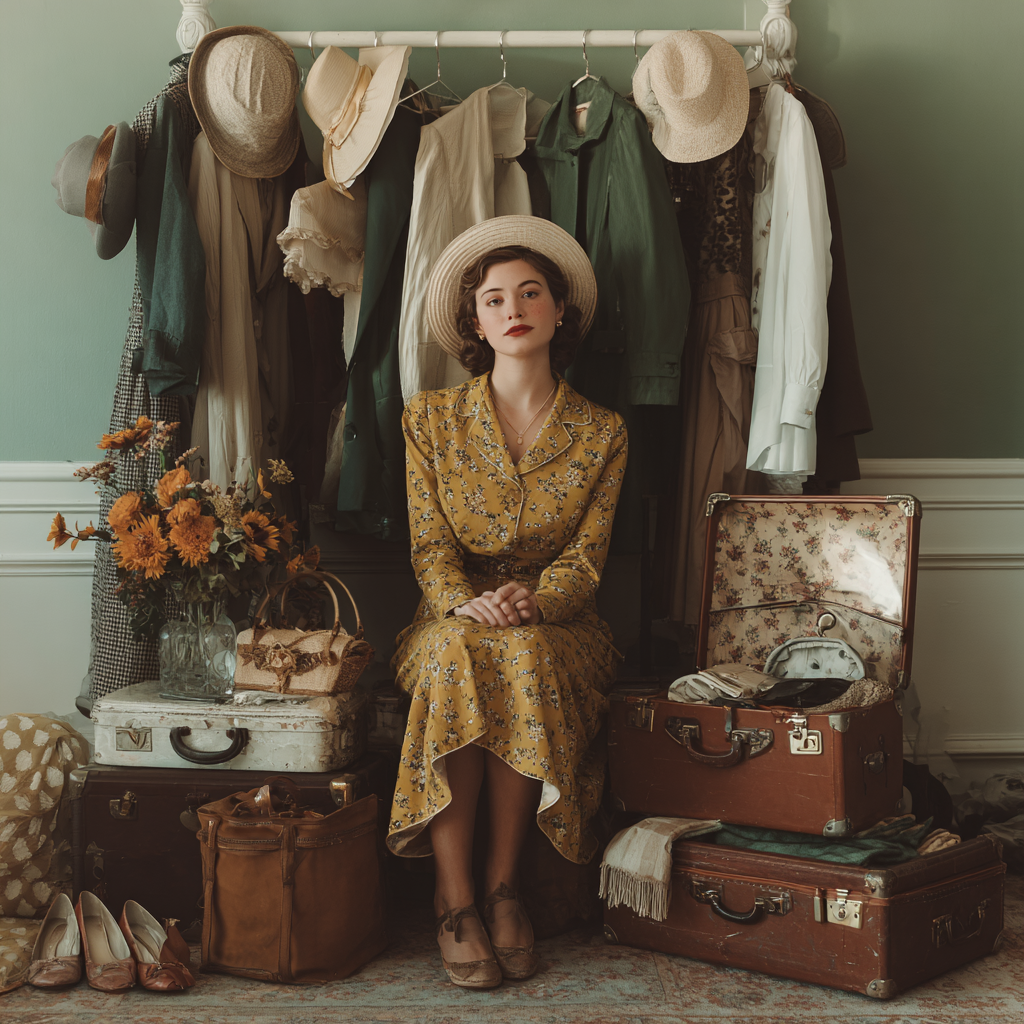
In many vintage eras, clothing was strictly coded. Your hemline, hat, or hairstyle might mark your class, gender role, or political affiliation.
- A flapper’s bare knees screamed independence.
- Wartime women’s uniforms suggested both utility and quiet pride.
- A carefully ironed apron could reflect both submission and domestic power.
- A woman wearing a crisp pantsuit because she is every bit as good as a man, running the company.
- The jitterbug dame who loves the swish of her eight-gored skirt as it wraps around her thighs.
The clothes your characters wear say what they can’t, so be selective when you dress your characters in vintage style.
Dress Your Characters in Vintage Style: A Cheat Sheet to Vintage Eras
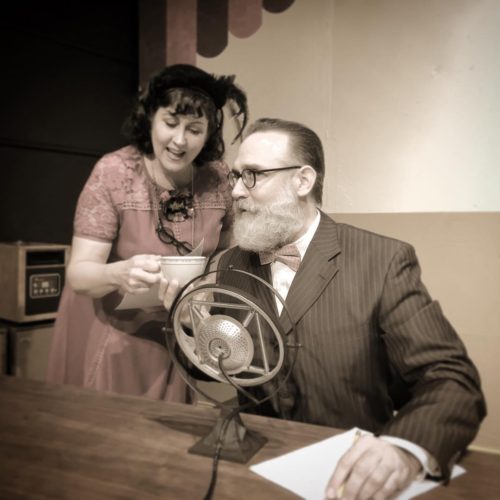
Each era has distinct visual signatures. Use these as shorthand or symbolism.
- 1920s: Drop waists, fringe, cloche hats, beading, embroidery, rebellious ease, slipper-like shoes in satin and soft leather.
- 1930s: Bias-cut dresses, elegance in economic hardship, sleek silhouettes, mid-calf, Cuban heels, ballroom dance-looking shoes.
- 1940s: Utility fashion, bold red lips, practical fabrics, military touche, knee-length skirts and dresses, a-line, novelty prints, studded designs, wedges and platforms with lots of ankle straps.
- 1950s: Full skirts, nipped waists, shelf-bust, Tiki & Polynesian post-war optimism (and repression), stilettos and peep-toe shoes.
You don’t need to describe every button and seam when you dress your characters in vintage style—just one or two meaningful details.

Dress Your Characters in Vintage Style: How to Write Clothes Without Losing the Plot
Avoid turning a fashion description into a catalogue when you dress your character in vintage style. Focus on:
- How it feels: “Her petticoats rustled like whispers behind her.”
- What it does: “He tugged at his starched collar, sweating through the sermon.”
- How others respond: “The neighbors said her heels were too high, and her lipstick too red.”
Let the clothing interact with the world. Let it move, but especially describe how it feels on the character and how the character feels when they wear it–or take it off.
Dress Your Characters in Vintage Style: Where to Learn More
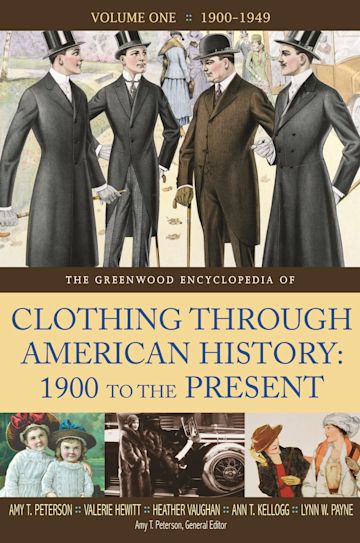
- Resources: Vintage fashion books, museum exhibits, old Vogue archives, YouTube channels that recreate historical dress, old patterns, classic movies.
- Search terms: “1940s utility fashion,” “1950s Dior New Look,” or “Dust Bowl working-class clothing.”
- Vintage-centric websites
- Chronically Vintage: A treasure trove of vintage outfit posts, history, and lifestyle tips (archived but still inspiring).
- The Vintage Woman Magazine Digital magazine dedicated to women who love vintage style, culture, and empowerment.
- We Heart Vintage A vintage lifestyle blog with fashion photography, historical posts, and celebrity style archives.
- Vintage Everyday Daily content with vintage fashion photos, celebrity archives, and retro ads.
- Miss Victory Violet A pinup and vintage blogger with styling tips, outfit posts, and hair tutorials.
- Nora Finds A blog mixing vintage fashion with modern reflections and travel.
- Vintage Dancer Historical fashion guides, costume help, and shopping links from the 1900s–1960s.
Final Thoughts
Dressing your characters is like costuming a play—just with words. When done with care, clothing becomes character, tension, and subtext all stitched into one.
::
Do you like fashion description in historical fiction or any fiction. What are some memorable description that stuck with you? What era’s fashion do you like the most?

Tam Francis is a writer, blogger, swing dance teacher, avid vintage collector, and seamstress. She shares her love of this genre through her novels, blog, and short stories. She enjoys hearing from you, sharing ideas, forging friendships, and exchanging guest blogs. For all the Girl in the Jitterbug Dress news, give-aways, events, and excitement, make sure to join her list and like her FB page! Join my list ~ Facebook page