
I’m currently working on my memoir story, Person in Progress, about a snapshot in time, when I was 21. I sold everything I owned, bought a one-way ticket and a Eurail pass, and backpacked through Europe. And did I mention I only had a hundred dollars in my pocket and was recovering from a sexual assault?
I thought I’d share some hot takes on what I’ve learned about the story under the story with 4 writing tips that can help you immediately in your writing. I’m focusing on memoir here, but this applies to fiction and autobiography as well.
What happens is only the surface story. The real story is what is happening underneath it.
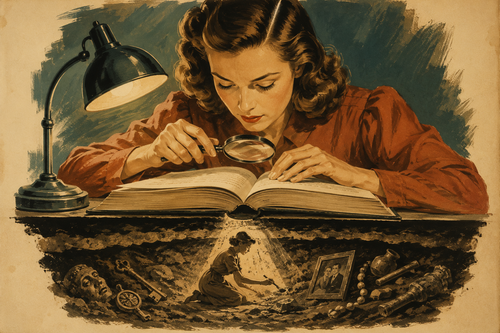
Four Discovery Paths to Dig Underneath
- Action can carry subtext. Don’t just have someone nervously cross the room. What they touch, avoid, straighten, clutch, eat, or throw away can reveal what they won’t say.
- Metaphor can uncover meaning. Don’t ask, What pretty thing does this remind me of? Ask, What does the metaphor reveal that I haven’t admitted directly?
- Dialogue can reveal what isn’t said. People dodge, deflect, joke, change the subject, or answer a different question. Ask: What conversation are they actually having underneath the dialogue?
- Emotion has a basement. “I was scared” may be true, but what’s underneath scared? Shame? Desire? Anger? Fear of abandonment? The horrible little thought you don’t particularly want your reader to know you had?
Your Memory Isn’t the Story Yet: Where to Dig
Start with the weirdness of memory: we remember the dress, the song playing, somebody’s cigarette, the wallpaper, the stupid thing somebody said. Those aren’t the story; they’re the raw material.
Write the scene. See what pops up. Then use that framework as a place to start digging.
Where to Dig: Action
What is your action saying? What is it covering up? Can you make it do double duty in the scene? One of the writers in my writers group gave a beautiful example of this in her piece.
Surface: Her mother was angry that her daughter hadn’t called or come home the night before.
Mom’s pissed.
Dig: Her mother looks at her daughter’s hands and says, “I see nothing is broken.”
The action (the look) combined with the dialogue works. She never has to say, Why didn’t you call? I was worried sick. The action tells us she was worried, the dialogue tells us she’s angry, and the way she delivers it tells us she’s a passive-aggressive mother. The action has become subtext.
Where to Dig: Dialogue
What was said? More importantly, what was NOT said?
Surface:
“Are you mad at me?”
“No.”
Someone asked a question and someone answered it.
Dig:
“Are you mad at me?”
“What do you want for dinner?”
Now I’m interested. People dodge. Deflect. Joke. Answer a different question. Sometimes what a character refuses to say tells us more than what comes out of their mouth. Look underneath the dialogue for the conversation they’re actually having.
Where to Dig: Metaphor
A metaphor becomes valuable when it changes our understanding of the narrator or character. It’s not just look at me write a poetic comparison. What does the image mean? What emotion does it elicit in one line that nails the character or circumstance?
Surface: His words cut like a knife.
We know she’s hurt and also recognize the cliché and skip over it without a lot of emotion. Why do the words cut?
Better Metaphor: His words left bruises I thought I’d protected.
Almost there, keep digging: bruises/protection is still doing what we expect. Why the need for protection?
Expanding the Metaphor: His words found the tender places I thought I’d protected, and suddenly I was that beat dog again, flinching before the kick even came.
Now the metaphor tells us more than this hurts. She’s been hurt by him before, tried to protect herself, and learned to anticipate the next emotional blow. The metaphor has been developed and pushed beneath what happened into why it hurt. Now I’m invested and if not empathizing, certainly sympathizing.
Ask yourself: Why did my mind reach for this particular image? What does it know that I haven’t said yet?

Where to Dig: Emotion
The goal isn’t to decorate with emotion. It’s to interrogate it and excavate it. What didn’t I (or the character) want to admit? What am I really feeling?
Don’t just write:
“I was afraid.”
Why? Afraid of what?
“I thought something bad would happen.”
Keep digging.
“I didn’t trust him.”
Dig deeper.
“I didn’t trust myself to know whether I should trust him because he reminded me of the guy who sexually assaulted me.”
There it is. That’s the kind of progression you need to find the emotional truth instead of stopping at “I’m scared” or “I’m angry” or “I’m embarrassed.”
For memoir particularly, it gives you room to explore the uncomfortable territory between what you felt then and what you understand now, which is memoir that feels real and connects to readers.
Don’t Be Afraid to Dig Up Something Ugly
Action, metaphor, dialogue, and emotion all fail when we stop at the first choice and don’t dig in our editing process. Digging means asking why, and sometimes the answer isn’t pretty.
Maybe you weren’t just scared. You were jealous. Maybe you wanted someone to fail. Maybe you stayed when you knew you should leave. Maybe your character isn’t protecting someone out of love, but because they need to be needed.
Don’t always paint yourself (or your characters) in the best light. Look for the contradiction, the selfish thought, the shame, the thing you wish you hadn’t felt. Raw is often more relatable than pretty. That’s where you need to dig. The deeper you go beneath what happened into why it mattered, the more a deeply personal story can resonate beyond the person who lived it.
That’s the story I’m trying to write with Person in Progress. And those are the stories I like to read. How about you? What connects you to a story? What are some of the best memoir’s you’ve read?
Tam’s Fave Memoirs:
- Operating Instructions by Anne Lamott
- The Lady in the Palazzo: Umbrian Love Story by Marlena de Blasi
- Call the Midwife by Jennifer Worth
- Some Girls, Some Hats and Hitler by Trudi Kanter (review)
- Crying in H Mart by Michelle Zauner
- Don’t Lets Go to the Dogs Tonight by Alexandra Fuller
- Wild by Cheryl Strayed
- Dreams of Trespass: Tales of a Harem Girlhood by Fatima Mernissi
- The Motorcycle Diaries by Che Ernesto Guevara
- A Moveable Feast by Ernest Hemingway (Host a Book Club)
- A Year in Provence by Peter Mayle
- Reading Lolita in Tehran by Azar Nafisi
- Zen and the Art of Motorcycle Maintenance by Robert Pirig
- Fear and Loathing in Las Vegas by Hunter S. Thompson
- I Know Why the Caged Bird Sings by Maya Angelou
Tam’s Fave Craft Book:
- The Art of Memoir by Mary Karr
- Story Genius by Lisa Cron
- Self-Editing for Fiction Writers by Renni Browne & Dave King
- On Writing by Stephen King
- Understanding Show, Don’t Tell by Janice Hardy
Tam’s Additional Blog Posts for Craft:
- Smells like Ink & Dust: Writing Vintage Settings: How sensory details, objects, atmosphere, smell, and setting can make a fictional world feel lived-in and emotionally real.
- Dress Your Characters in Vintage Style: Wardrobes of the Written Word: How clothing can reveal character, create tension and subtext, and do narrative work beyond simply describing what someone wears.
- 5 Elements for Your First 5 Pages: Notes from Shellee Roberts’s workshop on hook, character empathy, conflict/story question, intrigue, and voice.
- Stop Edit Shaming Indie Authors: A wide-ranging discussion of editing, critique, storytelling, writing style and your own revision process, including the craft books and workshops that have influenced you.
- Why Are You Hating on Present Tense?: A defense of present tense and the immediacy and reduced narrative distance it can create between reader and character.
- Do Artists Create Their Own Reality?: A reflection on absorbing other writers’ styles, developing your own writing voice, artistic identity, and how writers learn their craft.

Tam Francis is a writer, blogger, swing dance teacher, avid vintage collector, and seamstress. She shares her love of this genre through her novels, blog, and short stories. She enjoys hearing from you, sharing ideas, forging friendships, and exchanging guest blogs. For all the Girl in the Jitterbug Dress news, give-aways, events, and excitement, make sure to join her list and like her FB page! Join my list ~ Facebook page

It’s awfully early in the morning where I’m sitting, but this blog post sure has stirred me up, even more than the first cup of coffee.
Thanks for stopping by. I hope the tips were helpful.