
Smells like Ink & Dust: Writing Vintage Settings by Tam Francis

Writing Vintage Settings: Vibes
There’s a kind of magic in a room lined with cracked bookshelves, the scent of old paper lingering in the air, a slow fan humming quietly in the corner. When you’re writing a novel with a vintage slant, setting becomes more than just background—it becomes character. A well-drawn vintage setting doesn’t just tell the reader when and where they are. It makes them feel it.

Writing Vintage Settings: Atmosphere
What Makes a Setting Feel Vintage?
Writing vintage settings isn’t just about age; it’s about atmosphere. There’s also an ongoing debate at what is “vintage” and as time continues to march, that definition shifts. I consider “vintage” 1920s-1950s, but in the fashion world vintage is now very much 1940s-1990s, earlier is more antique. But in writing vintage settings for my purposes, let’s focus on 1920s-1950s and dive into the tension between what once was and what lingers still. A truly vintage-feeling setting draws from:
- Time-specific detail: old radios, gas lamps, cobbled streets, Bakelite switches.
- Texture and tone: a worn, lived-in space that feels touched by decades or a new art deco building newly minted for the era.
- Cultural memory: subtle cues like a wartime poster, a tea tin, or era specific cocktails.
- Fashion: everything from undergarments to dress length, trouser-leg width, and accessories.
Even without naming the year, you can suggest an era through details that gently hint at times gone by.
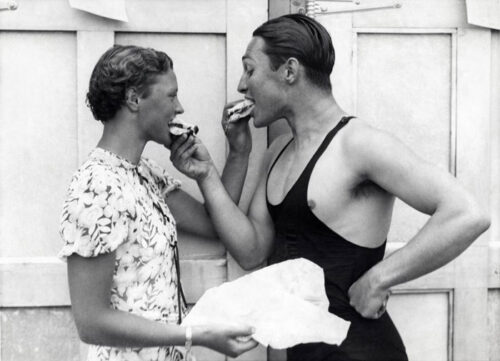
Writing Vintage Settings: Show Me
The Power of the Senses
To create an immersive vintage setting, lean on sensory (often times “showing” not “telling” writing).
- Sight: Think aged wallpaper peeling at the corners, lace curtains yellowed with time, mohair sofas.
- Smell: Musty attics, hot wax, perfume that smells like pressed violets or heirloom roses, tobacco smoke clinging walls and the scent of wet wool coats.
- Sound: A record crackling before the music starts, era specific bands and artists, floorboards groaning, distant whistles from a passing train, the hiss of radiator, and the clank of bakelite bracelets on an arm.
- Touch: Cold enamel, scratchy upholstery, the softness of a worn leather glove, the metal clip of a garter belt holding up silk stockings on a warm thigh.
- Taste: Tea steeped too long, homemade marmalade, iconic vintage penny candy or chocolate during ration years, unfiltered tobacco, cherry lip gloss.
A single sensory moment can evoke a whole era—use that power sparingly, but purposefully.

Writing Vintage Settings: Research & Live It
Research Meets Imagination
You don’t have to be a historian for writing vintage settings convincingly for scenes—but you do need to be curious.
- Research tools: Pinterest mood boards, old home videos, antique catalogues and patterns, or period photography, old movies, archives like the Library of Congress. (when researching slang for The Jitterbug Dress Series, I watched tons of bobby-soxer movies and wrote down everything they said).
- Experience the vintage: Thrift shops, flea markets, estate sales, and even museum exhibits offer tactile, visual inspiration. (I own a 1940s gas stove, vintage curling irons, as well as cake mascara and Marcel finger waves combs).
- Blend fact with fiction: Have your fictional characters interact with real historical figures or visit historical locations. It’s okay to invent, as long as you respect the essence of the era. (But don’t be anachronistic and put metal back zippers in 1920s dresses!)
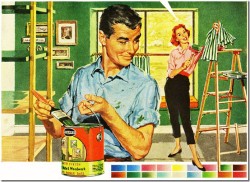
Writing Vintage Settings: Quick Fix
Quick Fixes to “Vintage-ify” a Scene
- Add one evocative object: A tarnished locket, a cracked mirror, or a worn ration book.
- Use lighting to shift mood: Candlelight, flickering neon, or low evening sun slanting through blinds.
- Layer in subtle old tech: No smartphones, but maybe a rotary phone half-buried in dust, lighting a gas stove with a match, laundry lines with wooden clips.
When writing vintage settings, don’t shout—whisper, whistle, and sing them to life. They don’t just look old, they feel like memory, like stories waiting to be told.
::
What are some of your favorite settings that feel vintage? Have you used real locations fictionally? Have your characters rubbed up against historical figures but in a purely fictional way? How much writing setting that feel vintage do you like to read and or write?

Tam Francis is a writer, blogger, swing dance teacher, avid vintage collector, and seamstress. She shares her love of this genre through her novels, blog, and short stories. She enjoys hearing from you, sharing ideas, forging friendships, and exchanging guest blogs. For all the Girl in the Jitterbug Dress news, give-aways, events, and excitement, make sure to join her list and like her FB page! Join my list ~ Facebook page
Solid advice. The examples are lovely and loving. Tam shows a lot of respect for even the smallest detail of the time period she writes in – and that is part of what makes it believable- Kellie
Thanks for stopping by and adding your kind words!
Tam knows vintage. She writes it, she dresses it, she lives it.
Phil McBride
Nice to see you again. Thanks for stopping by. Not sure why your anon, now. Something happened when I switched hosting, but thank you!
Your novels and a whole lot of the life I see Tam living reflects what you wrote here about writing ‘vintage.’ Insightful and well said.
Thank you for coming over and checking out the blog and for commenting. Hope there was some useful info for you!